
IoT Prediction Report 2021
Author:深圳市磊科通科技有限公司
Click:
Time:2021-05-04 15:32:55
IoT Prediction report 2021
IoT solutions will make supply chains more cost efficient, flexible and resilient.
1. Global supply chains are under pressure to transform
Insufficient visibility and legacy technologies hinder efficiency
International trade has been considered a key driver for global prosperity. The free flow of goods reduces production cost as goods can be made where labor, manufacturingor material costs are lower. During the past decades, trends in supply chains have pointed in one direction – more globalized, leaner, less lead times, less inventory.
However, many enterprises have found that although global supply chains bring significant benefits, they also come with increased complexity. There is still a lot of room to improve efficiency and conduct business more sustainably. Insufficient traceability and transparency have been an industry-wide challenge.
It results fromthe use of manual processes and legacy systems that lead to information silos and cause errors, delays and high costs. Companies have increasingly embraced the ideaof transforming their supply chains to become “smarter” and more efficient through the use of different technologies such as advanced robotics, embedded sensors and connectivity, big data and analytics, AI and more.
The covid-19 pandemic and rising trade barriers accelerate the need for change
The need for transformation became particularly acutely felt during 2020. The onset of the covid-19 pandemic further exposed some vulnerabilities in companies’ global supply chains and manufacturing strategies. During the pandemic, the productionof some goods was paused as workforces and entire factories were quarantined.
Countries around the world experienced shortages of personal protective equipment (PPE), medicines and other products and tens of countries responded to these shortages by imposing temporary restrictions on the export of essential goods inorder to protect their domestic supply. At the same time, enterprises have struggled to adjust to rapidly changing demand due to outdated manufacturing technologies and planning processes.
Prior to the pandemic and associated lockdowns, global supply chains were already under strain due to the US-China trade conflict and rising trade barriers such astariffs. These developments combined put pressure on long and complex globalsupply chains in two main ways. One is that enterprises have become more aware
that they may be overexposed to disruptions. The other is a rising political pressure on companies to increase their domestic production and diversify their supply chain internationally in order to avoid overreliance on suppliers that can be considered “risky”.
However, it is not so simple for enterprises to rethink their supply chains and manufacturing. The costs of moving production domestically or building a supplierinfrastructure in a different country or region, and sourcing from more than one supplier to reduce risk is prohibitively high for many industries. This can entail supplier renegotiations, factory relocations and new workforce recruiting. For example, car manufacturers and electronics makers have expensive and complex supply chains that rely on specialized labor and operations. Other industries such as textile and garment manufacturing may find it easier to relocate or make changes to their supply chain.
The direction ultimately chosen will differ across companies, industries and countries as there is no one solution that fits all. What is safe to conclude is that global supply chains will need to become even more resilient, flexible to adapt to changing demands, and efficient while at the same time protecting workers’ health and well-being.

The changing landscape calls for a new approach
The supply chain vulnerabilities described above are largely structural and relate to the fundamental way in which global supply chains are organized. As such, thesechallenges cannot be solved by technology alone but IoT-enabled capabilities can
play an integral role and bring considerable benefits as part of the wider digitalization effort. IoT has proven its worth to early adopters by helping many of them to navigate better through the recent pandemic. Companies with more visibility and flexibility in their supply chains, arising from higher degree of connectivity and automation, have been able to adapt production to changing demands, anticipate inventory shortages and have had a more secure workforce.
Therefore, we anticipate that many enterprises will aim to strengthen their supply chains by focusing on cost-efficiency, flexibility, resilience and traceability. As part of this journey, IoT and automation solutions will be an important enabler and we will see accelerated deployments throughout the supply chain.
A. COST EFFICIENCY.
Global market competition has been intensified by lower and fluctuating consumer demand due to the pandemic, which increases the pressure on enterprises to identify and eliminate inefficiencies along their supply chain. This applies to the interaction of different supply chain elements, for example the handover of goods from the manufacturing to the delivery process, as well as efficiency within each of the supply chain elements. Hence, enterprises are looking to minimize OPEX and CAPEX, accelerate time to market, boost customer satisfaction and increase overall output for bottom and top-line growth.
B. RESILIENCE.
Current globalized supply chains are sensitive to changing economic and political environments due to their reach and complexity. Hence, supply chain resilience is important to ensure that enterprises can sustain output, time to market and cost efficiencies even in challenging environments. With tightening import restrictions and quarantines entailing extended lead times and production downtime, supply chain resilience is becoming ever more important. Enterprises need to be able to understand the vulnerabilities along their supply chain to changing environments and make sure that they are equipped with the right resources to resume production and satisfy customers even as times get tough.
C. FLEXIBILITY.
Consumer demands are rapidly evolving and enterprises are becoming increasingly competitive in tailoring products to consumer needs. Flexible supply chains can produce at larger and smaller volumes without compromising cost efficiency and are able to alter product specifications quickly. In the context of the recent pandemic, companies needed the ability to quickly alter theirsupply chain to meet changing production environments. In particular, this means not only changing machinery configurations, but all the processes along an entire supply chain to fulfill respective orders.
D. TRACEABILITY.
A key challenge faced by supply chain managers is insufficient visibility and understanding of their supply chain and the product journey. This touches upon every aspect – from raw material and components sourcing to finished goods delivery. Data is often collected manually, badly visualized and scattered across platforms with some parts of the product journey being completely invisible.
There is a strong need to ensure data continuity, centralizing data into one platform and applying AI and analytics to create a fully traceable and transparent supply chain. With a better understanding and visibility of all elements and processes, supply chain managers will be able to identify potential for efficiency improvements, plan for flexible production of different goods and enable predictive and preventive measures to avoid production downtime.
2. How IoT solutions will strengthen the supply chain for enterprises

Over the coming pages we explore some examples of use cases in which IoT solutions will be increasingly adopted. We focus in particular on the manufacturing and distribution parts of the supply chain where wireless cellular connectivity can offer strong benefits.
A. Manufacturing
Remote monitoring solutions increase manufacturing productivity
During manufacturing, enterprises aim to maximize uptime and productivity on the factory floor and in assembly lines while decreasing cost. Traditionally, human technicians have had to manually monitor output, machine wear and utilization.
In times of travel restrictions and quarantine, many enterprises have been forced to reconsider this approach and see this as an opportunity to radically digitalize the monitoring of their factory assets. Sensors can collect real-time data on total output, utilization and wear per machine. Technicians are thus able to oversee factory performance remotely and in real-time on dashboards without having to be present or exposed to health or safety risks on the factory floor. They can intervene if any issues arise or alter production planning in response to changing customer demand. In the long run, the vast amount of data collected and analyzed helps to improve process flows and maintain machines preventively.
With enough data, AI models will indicate if machines are close to breaking down and need replacements thus minimizing the need for maintenance. Remote monitoring solutions use the power of big data and will be especially powerful when combined with new connectivity technologies such as 5G that can provide greater bandwidth and low latency.
Automation on the factory floor can aid human workers
Businesses will increasingly automate processes on the factory floor through robotics, bots, mechanical arms and other similar technologies. Some companies may delay the rollout of full automation programs given the impact of the pandemic on their CAPEX budgets.
Partial automation can be a first step since the combination of human workforce and technology has significant benefits at affordable cost. For example, cobots are robots that are capable of collaborating with humans in an intelligent and safe manner. They are easily programmed, versatile and adaptable to various activities that human workers may want to avoid. This can be dangerous work such as screw-driving with a high number of repetitions or simple and repetitive work such as spraying color or sanding surfaces.
Cobots thereby increase worker satisfaction by taking over tasks that humans may experience as mundane, repetitive and physically tough. Augmented and Virtual Reality technologies enhance the human workforce in training or simulations. Workers can be guided in training through every step of the production process and simulations of key processes can be used to identify mistakes that maylead to potential disruptions.
IoT solutions can improve workers’ health
Workers’ health and safety have become increasingly important questions in recent years. The recent covid-19 pandemic has highlighted the need to provide a safe work environment. As workers are returning to manufacturing facilities while the need for physical distancing still remains, companies need to safeguard their health. This has given rise to various IoT solutions such as wearable devices (wrist bands or smart ID cards) that can send audible and visual alarms when people are in close proximity and in the case of infection can provide data for contact tracing.
Other solutions include sensors and cameras that monitor the flow of people and can help avoid congestion in key areas. Enterprises, however, will not only focus on immediate measures but also take a more holistic and long-term view on using IoT solutions to improve worker health and well-being.
Enterprises will increasingly deploy IoT solutions that are directly tailored to the activities, movement and physique of individual workers. A US-based start-up, for instance, has developed a glove for poultry industry workers that analyzes their wrist movements and identifies movement patterns that may lead to carpal tunnel
syndrome (wrist injuries).
Another solution based on AI assisted computer vision can identify whether workers are wearing their protective equipment such as masks or gloves. The benefit of such solutions is that they support workers on the individual level and can help to prevent safety risks and injuries in real-time.
A key aspect impacting worker health and well-being is indoor climate. Factories are already equipped with a range of sensors detecting room temperature, humidity and CO2 levels to enable building managers to adjust these parameters to a recommended level.
Looking ahead, that focus is going to shift to more sophisticated building management by syncing air flow control and temperature level in real-time to the number of people present on the factory floor. In addition to ensuring workers’ comfort such solutions can help to optimize energy usage. It is also possible to offer more
personalized comfort by factoring in workers’ individual preferences for temperature.

B. Transport & logistics
Asset tracking solutions enable greater visibility and operational efficiency
Customers want to know when to expect their delivery, potential delays and the environmental impact of the journey. Enterprises in turn want to stay on top of the location of their cargo, reduce loss and theft, improve delivery times and decrease cost. Asset tracking solutions transmit real-time data on the location and condition of goods through sensors attached to the freight. Real-time data notifies of any issues during transportation and allows to address them immediately.
For certain types of goods, temperature and humidity sensors are installed in shipping containers or trucks to ensure appropriate storage. In the long-term, the collected data combined with analytics enables enterprises to optimize routes, identify bottlenecks and compare supplier efficiency. Asset tracking solutions are relatively mature and easy to deploy. The connectivity technology options have also expanded with the global rollout of NB-IoT and LTE-M networks that provide live tracking with highly accurate geolocation capability in a very compact size and at an affordable cost.
Kotonlink goods tracker and asset tracker series products can meet customer's different requirements.

Fleet management optimizes goods delivery
An important part of the supply chain is managing the vehicles that carry out the distribution of goods. Telematics systems gather real-time data on the location and performance of fleet vehicles, store and analyze the data and allow fleet managers to communicate with the driver. This allows to identify the optimal route based on the truck size, cargo and driver experience as well as to make real-time adjustments and handle possible delays in case of traffic or weather changes.
Vehicle wearcan be monitored to enable preventive maintenance, which will reduce vehicle downtime, improve fuel efficiency and vehicle utilization. Driver behavior, for example speed and breaking patterns, can be also analyzed to improve safety, lower insurance premiums and fuel consumption. Tracking the location of vehicles
is a key enabler for enterprises to gain full visibility of their supply chain, and hence fleet management solutions are going to see an increased adoption. Cellular LPWA technologies will facilitate corresponding data transmission and speed up the adoption of real-time use cases.
Kotonlink vehicle tracker series products can offer various different choices for customers.

Visilion by Sony: providing smart logistics tracking
Smart tracking is becoming a clear expectation for asset owners and companies transporting high-value goods. Sony has developed Visilion, an asset tracking and supply chain visibility platform. It enables two different solutions – outdoor tracking for the logistics sector, and indoor tracking for the healthcare sectors.
At the heart of the offering are very slim physical trackers that customers can affix to shipping crates or medical equipment.
The solution includes a web portal that allows users to follow shipments on a digital map and respond to alarms. It is using LTE-M connectivity, which enables a long battery lifetime and superior global coverage. The solution improves efficiency and reduces cost by optimizing transit times, inventory and delivery ETAs. Other benefits include greater control of theft and loss alerts for route deviation, geo-fencing and detecting shock abnormalities.
Kotonlink has built strategic partnership with Quectel and has mature and complete local Chinese hardware supplier chain. Kotonlink main business mode is to provide asset tracker devices, customer will use their own platforms and integrate Kotonlink devices into those platforms.
M2Cloud: creating the next generation pharmaceutical supply chains
Successful delivery of vaccines requires precise control of the transportation conditions – specifically temperature and light – to safely store, manage and distribute medicine. M2Cloud provide scalable logistics and monitoring solutions for use in healthcare. Boksan Nice, one of South Korea’s leadingpharmaceutical distributors, selected M2Cloud and Kotonlink's partner as supply chain solution partners.
Kotonlink provides cellular connectivity trackers and IoT gateway, and M2Cloud provides the supply chain management solution. Sensors connected to the fridges and freezers onboard every delivery truck check temperature and humidity and send the data to a server via an IoT gateway.
If any temperature fluctuations occur, corrective measures can be taken. When receiving the vaccines, hospital staff scans a QR code to check the temperature log data from the server. The solution enables transparency and traceability in the cold chain and thus safe transport of vaccines.
C. Warehouses
Automation in warehouses
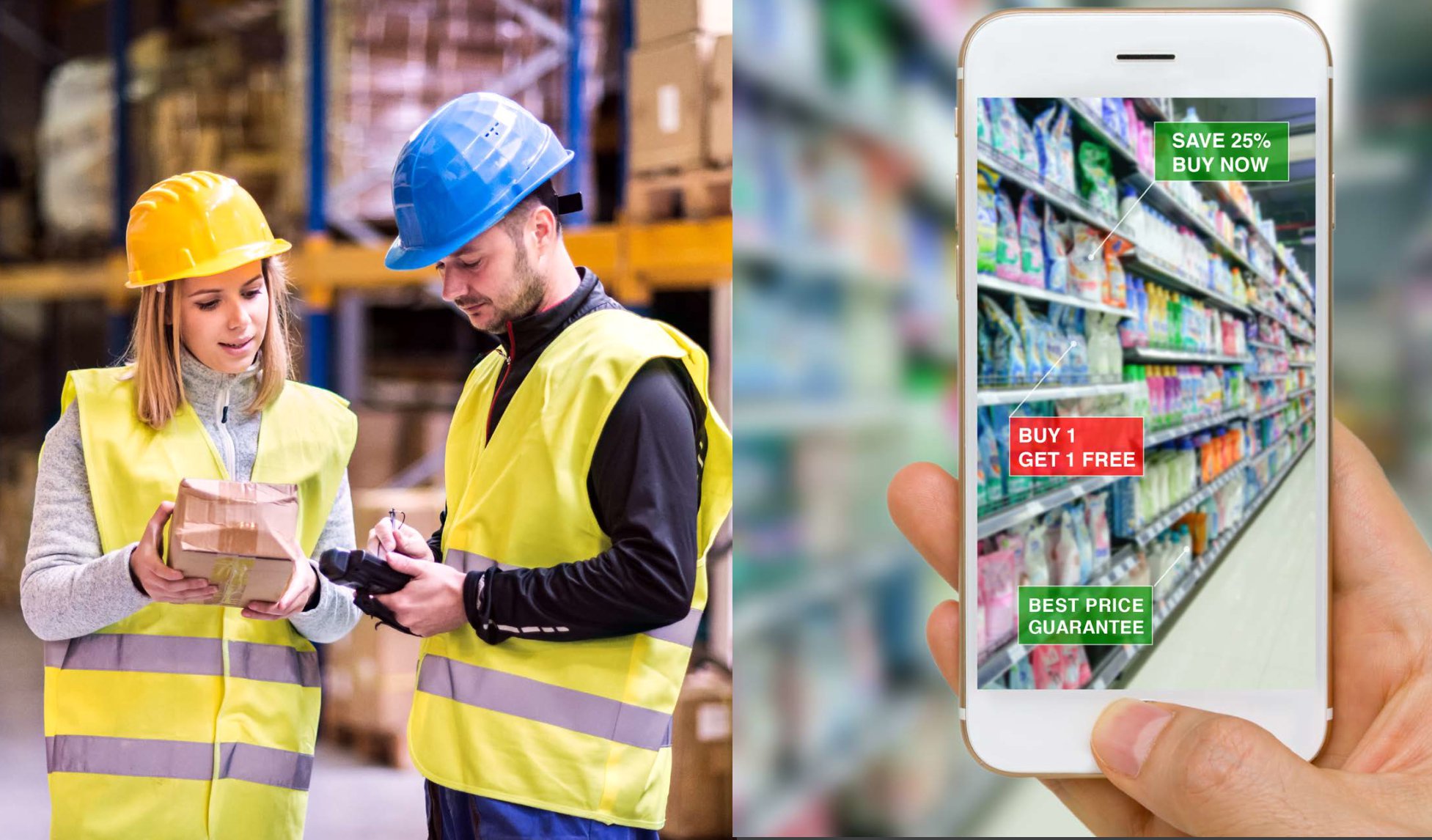
Many warehouse activities are repeated frequently and require a high-level of detail and speed while some may even pose safety risks to warehouse workers. At the same time, with the increase in e-commerce in light of the pandemic, warehouses and fulfillment centers are under great pressure to operate faster and more efficiently as both customers and suppliers expect fast delivery times and have a low tolerance for errors or delays. Hence, there are significant benefits in automation.
Thanks to more affordable mobile robotics and improvements in wireless connectivity, it is now possible to deploy automated guided vehicles (AGVs) and mobile robots that assist in moving or storing items in specific warehouse locations. Pick-to-light systems guide workers with the help of barcodes and LED to the location of items and thusreduce the risk for human error and improve the pace of operations. In the future, AR glasses will be increasingly used to give workers visual directions.
Many warehouses still rely on fixed-line connectivity systems and various short-range technologies utilizing unlicensed spectrum, which exposes them to potential security risks and performance issues as the number of devices increases. However, 5G networks which are being globally rolled out (as well as existing 4G LTE networks) offer considerable advantages in terms of speed, bandwidth, latency, security and intelligence. Enterprises can reap significant gains by combining AGV solutions based on wireless connectivity together with other systems such as a robotics control system and warehouse management system to meet the challenges of warehouse operations.
D. End-to-end capabilities
Digital twins can help understand and optimize the full supply chain
The various IoT use cases discussed earlier are increasing automation and data collection and deepening
enterprise insights on factory and distribution processes. However, part of the challenge enterprises currently faceis understanding the underlying factors driving vulnerabilities across the supply chain, mainly due to insufficient understanding of how raw material supply, production and distribution affect each other. There are many complex questions to gain deeper insight on, such as – how is the distribution network affected if machines on the factory floor break down? What kind of inventory needs to be in store if demand for specific raw materials rises? How are suppliers and hence cost affected by an import tariff on Chinese hardware?
The digital twin has been a trending technology aiming to help visualize and understand data centralized in a cloudenvironment. It is a digital copy of the physical supply chain based on the data relevant to understand it. Thereby all data and platforms from fleet management to asset tracking use cases are centralized in one platform and visualized ina cloud-based ecosystem with integrated analytics features. Data from relevant external sources such as local demand, weather, and more is additionally integrated.
The digital twin gives enterprises a holistic view of the supply chain and makes it possible to drill down into the factors driving uncertainties – who are the suppliers of raw materials and how are they affected by quarantines? Being able to understand these driving factors enables enterprises to plan and prepare for coming uncertainties and changes. They can use the digital twin to simulate various scenarios, plan accordingly and be prepared to adapt when supply chains experience upheaval. Digital twins will see an increased adoption to provide full end-to-end supply chain visibility thus giving enterprises the power to develop more change-resilient supply chains through better planning ability and flexibility.
Conclusion
During the coming years we expect to see a broad transformation of global supply chains. Some of the changes may be structural – some enterprises may choose to move production to new regions or home markets. However, the most profound change will be in the increased digitalization of supply chains through the use of technologies such as robotics and automation, embedded sensors and connectivity, analytics and AI.
While this trend was already under way during the past few years, the urgency for change became acutely felt during the covid-19 pandemic. The foundation for making supply chains more efficient, flexible, resilient and transparent is data and reliable connectivity. Therefore, companies will be increasingly turning to IoT solutions, and the ones that are ahead in their adoption will gain competitive advantage and financial returns.
Prev : QuecPython | support asset monitoring terminal to the ground, more reliable and more flexibleNext : History Wireless Communication Module Manufacturers
Your love is my driving force!
YouArticle
已有1人推荐
文章推荐

